One More Channel, Zero More Chaos.

26th August 2026

Lean service teams don't need more people to serve more channels. They need one queue.
The request lands every quarter. Customers are asking for WhatsApp. Marketing wants web chat on the new site. Someone senior read about social care. And every time, the same maths kills it: another channel means another inbox, another rota, another place to be thin. For a team of eight answering for the whole business, the honest answer has been "we can't cover it", however much customers want it.
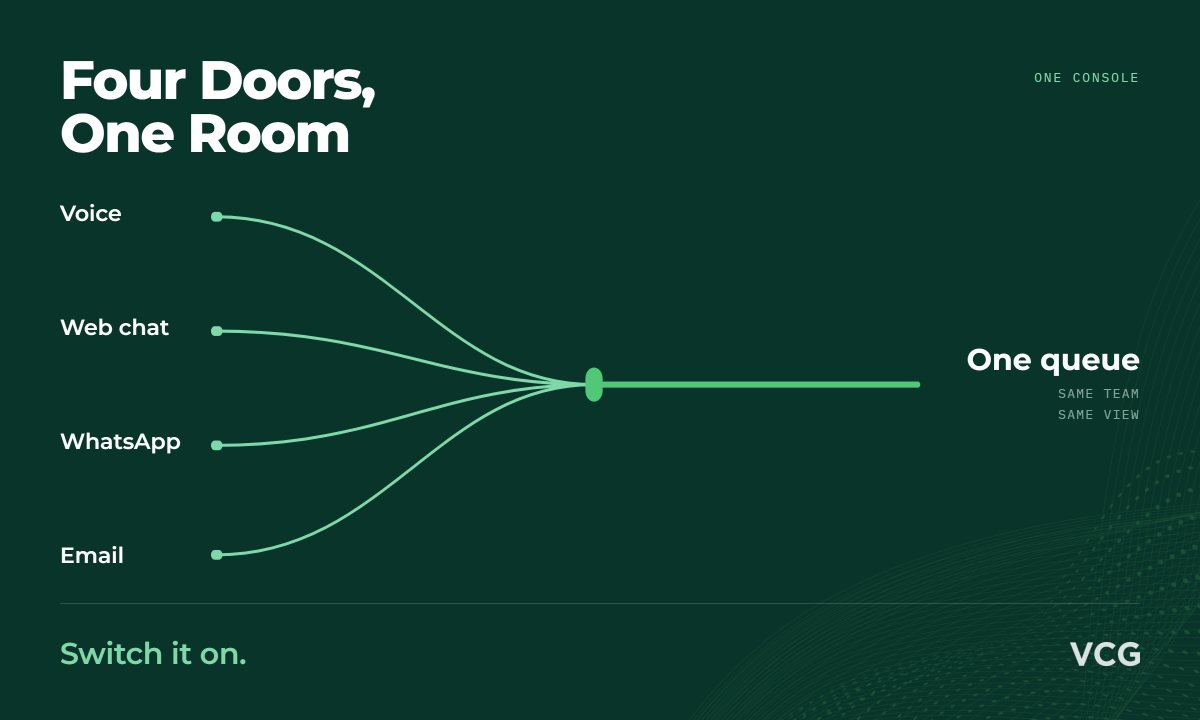
That maths comes from an assumption so old nobody says it out loud: each channel needs its own team. It was true when each channel was its own system. It stops being true the day every channel lands in one console, in one queue, handled by the same people with the same view of the customer. A chat message, a WhatsApp, an email and a call are no longer four workloads: they are one workload, arriving through four doors.
Adding a channel becomes a routing decision, not a recruitment one.
AI changes the capacity, not just the plumbing. Virtual agents answer the everyday instantly on every channel at once, day and night, which typically absorbs the largest share of volume before it reaches anyone. Agents handle several chat conversations in the time one call takes, with AI suggesting answers and writing the summaries. Context follows the customer between channels, so the WhatsApp that becomes a call doesn't start from zero.
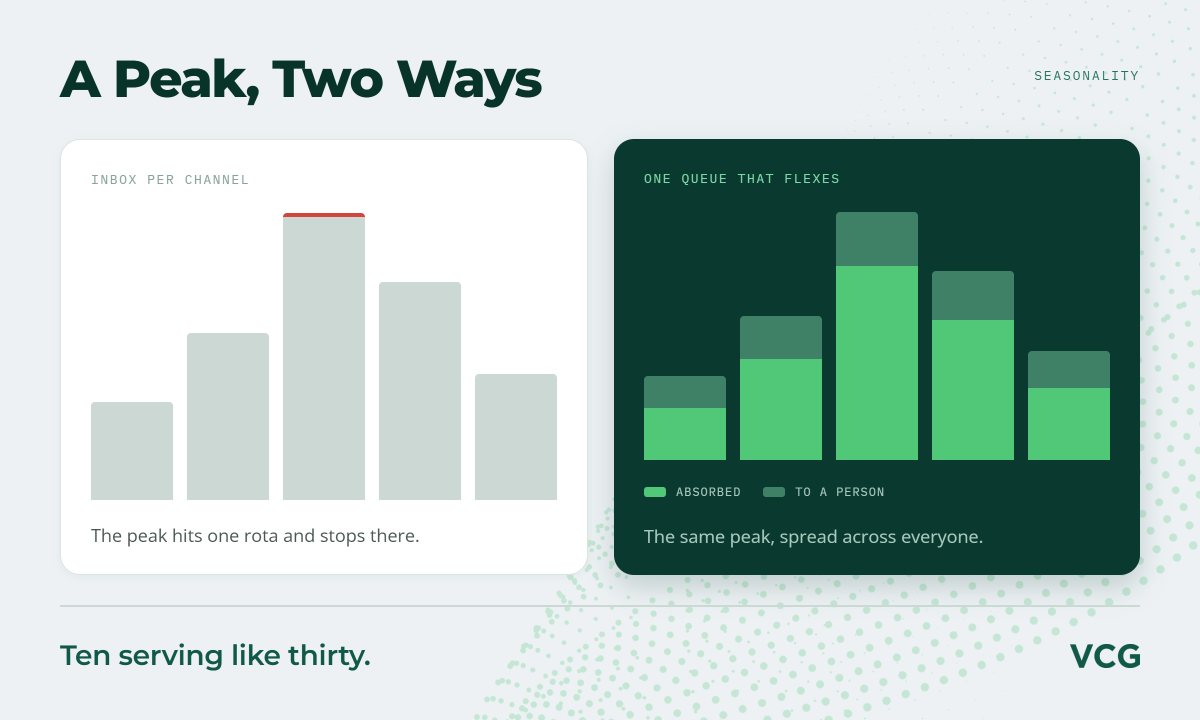
Seasonality stops being terrifying for the same reason. Peaks flow into a queue that flexes, AI takes the routine surge, and the team concentrates on the conversations that need judgement. That's how a team of ten serves like a team of thirty, without anyone working like three people.
So the next time the WhatsApp request lands, the answer changes. Not "we can't cover it", but "switch it on". Better for customers, easier for the team, and no headcount conversation required.